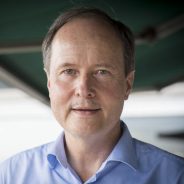
Jean-François Soussana
Jean-François Soussana is Director of Research and Vice-President of INRAE in charge of international policy, after having been Scientific Director for the Environment. An agricultural engineer with a doctorate in plant physiology, he headed a research laboratory on ecosystems and global change. A member of the IPCC as lead author since 1998, he coordinates national and European research projects, as well as international programmes on agriculture, soils and climate change. A highly cited researcher (2018), he has published more than 150 articles in international scientific journals. He shared the Nobel Peace Prize in 2007 with the authors of the IPCC and has received several national and international awards.
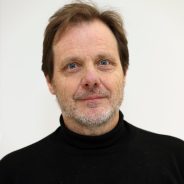
Michel Colombier
Michel Colombier is Scientific Director of the Institute for Sustainable Development and International Relations (IDDRI), Director of the Energy and Environment Prospective Engineering Club (CLIP) and Associate Professor at Sciences Po Paris.
As an engineer and economist, he has developed extensive operational expertise in the field of energy and related aspects of environment. He taught at the Universities of Bordeaux 1 (science), Paris-Nanterre (economics) and Paris-Saclay (energy). He was previously Director General of International Consulting on Energy (ICE); Advisor to the French Minister of Energy; Head of the “Strategy and Evaluation” Department at the French Environment and Energy Management Agency (ADEME); and Programme Director for the Portuguese Ministry of Environment and Energy Transition. He has served as a member of the Scientific and Technical Advisory Panel of the Global Environment Facility (GEF) and the French Facility for Global Environment (FFEM). He was also a negotiator in the UNFCCC process and member of the Board of Climate Strategies (London). He also chaired the French Expert Committee for the Energy Transition (CETE).
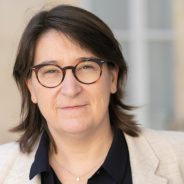
Sophie Dubuisson-Quellier
Sophie Dubuisson-Quellier is Research Director at the French National Centre for Scientific Research (CNRS) and Deputy Director of the Centre for the Sociology of Organizations (CSO), a joint research unit affiliated with Sciences Po and the CNRS. She conducts a research programme in the field of economic sociology, specifically on the social construction of consumer behaviour by analysing the role of social movements, public policy and commercial mechanisms. Author of several scientific publications, she has notably published the second edition of "La consommation engagée", co-authored "Le biais comportementaliste" in 2018 and was the lead author of "Gouverner les conduites " in 2016, published with Presses de Sciences Po. She holds a PhD in sociology from the École des Mines in Paris.
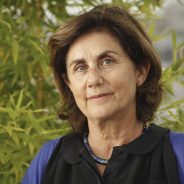
Marion Guillou
Graduate of the École polytechnique and Ensae with a PhD in environmental economics, Alain Grandjean is the co-founder and member of Carbone 4, an independent consulting firm specialising in low carbon strategy. He is a Scientific Committee member at the Fondation Nicolas Hulot. In 2013, he chaired the Expert Committee for the National Debate on the Energy Transition (DNTE). With Pascal Canfin, he co-authored the report "To mobilize the funding for the climate", presented to the President of the Republic in 2015. With Gérard Mestrallet and Pascal Canfin, he co-authored a report on carbon pricing, presented to the COP21 Chair in 2016. He has also co-authored several books and runs a blog called "Chroniques de l’anthropocène".
Céline Guivarch
Marion Guillou is a State Advisor on special service and member of national and international boards of directors (French Institute of International Relations/IFRI, Bioversity International and International Center for Tropical Agriculture/CIAT). She is also an administrator in private companies and NGOs. Previously a researcher, she chaired the French National Institute for Agricultural Research (INRA) (2004-2012) and the Board of the École polytechnique (2008- 2013), and held the positions of Executive Director of INRA (2000-2004) and General Director for Food (1996-2000). She founded the European initiative on agriculture, food security and climate change (JPI-FACCE).
Jean-Marc Jancovici
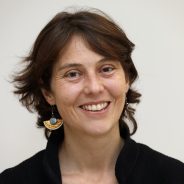
Céline Guivarch is a research director at the École des Ponts and economist at the International Centre for Research on the Environment and Development (CIRED). Her work focuses on the economic impacts of climate change and trajectories for reducing greenhouse gas emissions. It has informed the analysis of the physical and economic components of these trajectories, the processing of uncertainty in models and scenarios, and decision-making in situations of uncertainty. She is one of the authors of the IPCC's Sixth Assessment Report.
Paul Leadley
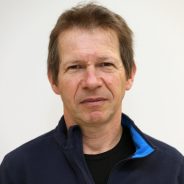
Jean-Marc Jancovici has been working in the field of climate science since the early 2000s. He is a founding partner of Carbone 4, an independent consulting firm specialising in low carbon strategy. He is also the founder and chair of The Shift Project (a non-profit organisation founded in 2010, which advocates the proactive shift to a post-carbon economy) and Professor at Mines ParisTech since 2008. Since 2000, he has also been involved in a range of outreach initiatives aimed at explaining the energy and climate to the public. His expertise is in the physical analysis of the economy, energy accounting (he is the lead author of the GHG accounting method, Bilan Carbone®) and energy supply. He is a graduate of the École polytechnique and Télécom ParisTech.
Goneri Le Cozannet
Benoît Leguet is Managing Director of the Institute for Climate Economics (I4CE), the think tank on the economy of the energy transition founded by Caisse des Dépôts and the Agence Française de Développement (AFD). Since 2002, Benoît has been advising public and private decision-makers on the transition to a low-carbon, climate-resilient economy. He teaches economics of climate change for various Master- and Doctorate-level programmes. He is also a member of several expert groups, including the High Council on Climate, Economic Council for Sustainable Development (CEDD) and Scientific Committee of the GoodPlanet Foundation. Benoît Leguet is an engineering graduate of the École polytechnique and ENSTA ParisTech, and has a Master's degree in the economics of sustainable development, energy and the environment from the University of Paris X-AgroParisTech-École polytechnique.
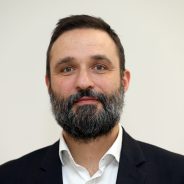
Benoît Leguet
Valérie Masson-Delmotte is a researcher in climate science (Research Director at the French Alternative Energies and Atomic Energy Commission/CEA) at the Laboratory for Climate Science and the Environment at the Institut Pierre Simon Laplace, based at the University of Paris Saclay. She has co-chaired the IPCC's Working Group I on the physical scientific basis of the climate system and climate change since 2015.
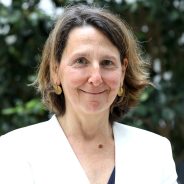
Selma Mahfouz
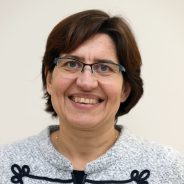
Valérie Masson-Delmotte
Laurence Tubiana is President and executive director of the European Climate Foundation (ECF), chairs the Board of Directors of the Agence Française de Développement (AFD) and is a Professor at Sciences Po Paris. Before joining the ECF, Laurence Tubiana was an Ambassador for international negotiations on climate change and Special Representative for COP21 and, as such, a chief architect of the Paris Agreement. Following COP21, she was appointed High Level Champion for climate action. Laurence Tubiana has also held a range of academic and university positions, including at Sciences Po and as Professor of International Relations at Columbia University in New York City. In 2002 she founded the Institute for Sustainable Development and International Relations (IDDRI), that she ran until 2014.
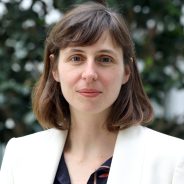
Diane Strauss

Laurence Tubiana
Laurence Tubiana is the President and CEO of the European Climate Foundation (ECF). She also serves as the Chair of the Board of Directors of the French Development Agency (AFD) and is a professor at Sciences Po Paris. Prior to joining the ECF, Laurence Tubiana was France's Ambassador for climate change negotiations and Special Representative for COP 21, making her one of the key architects of the Paris Agreement. Following COP 21, she was appointed High-Level Climate Champion.
Laurence Tubiana has also held several academic positions, including at Sciences Po and as a Professor of International Relations at Columbia University in New York. In 2002, she founded and led the Institute for Sustainable Development and International Relations (IDDRI) until 2014.